


Launching the BlueRights research agenda
How can universal human rights be effectively protected when people are at sea — and who is responsible for ensuring that protection?
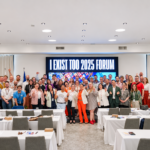
The opening conference of COST Action BlueRights brought together academics, practitioners, international organisations and other stakeholders in London to launch a four-year programme examining the protection of the rights to life, liberty and health at sea.
The conference reflected the central questions underpinning BlueRights: what do these fundamental rights mean when applied in maritime spaces, and which States, institutions and other actors are responsible for protecting them?
Three academic panels explored each of the Action’s core rights in turn, before a stakeholder roundtable connected the legal research agenda with perspectives from European and international institutions, industry, civil society and maritime initiatives.
The right to life at sea
Chaired by Professor Sir Malcolm Evans, the first panel brought together Professor Richard Barnes, Dr Ainhoa Campàs Velasco and Professor Jacques Hartmann.
The discussion examined the right to life in the maritime environment from both theoretical and practical perspectives, including the legal obligations surrounding search and rescue at sea.
The session highlighted a recurring challenge for human rights protection offshore: familiar legal principles can become harder to apply when responsibilities are divided across jurisdictions, institutions and maritime zones.
The right to liberty at sea
The second panel, chaired by Professor Anna Petrig, featured Professor Laura Carballo Piñeiro, Daphne Guelker and Dr Efthymios Papastavridis.
Presentations focused on threats to liberty in maritime settings, including forced labour, arrest and detention. The discussion brought attention to the different ways in which people at sea may experience restrictions on their freedom — and to the importance of identifying both the applicable legal protections and the actors responsible for enforcing them.
The right to health at sea
In the afternoon, Dr Jean-Pierre Gauci chaired a panel with Dr Sofia Galani, Dr Arron N. Honniball, Professor Patricia Kennedy, Professor Momoko Kitada and Professor Senka Šekularac-Ivošević.
The session explored different dimensions of the right to health at sea, including health in situations of crisis and conflict, mental health and seafarers’ wellbeing.
Together, the contributions reinforced the need to understand health at sea broadly: not only as access to medical treatment, but as something shaped by working and living conditions, isolation, risk, conflict and the wider structures governing maritime employment and mobility.
Connecting research with practice
The conference concluded with a stakeholder roundtable chaired by Professor Irini Papanicolopulu.
Participants included:
- Pierandrea Leucci, European Commission DG MARE
- Gabriele Goettsche-Wanli, formerly United Nations Division for Ocean Affairs and the Law of the Sea
- Eve De Coning, Blue Justice Initiative
- Neil Henderson, Gard
- David Hammond, Human Rights at Sea International
The roundtable brought European and global perspectives into the discussion and highlighted the importance of connecting legal scholarship with the institutions, organisations and initiatives working directly on maritime governance and the protection of people at sea.
Why the conference mattered
The London conference marked the beginning of BlueRights’ work as an international research and practitioner network.
By examining life, liberty and health together, rather than as separate legal questions, the event established the approach that continues to shape the Action: people at sea may face overlapping risks, while the legal frameworks and institutions responsible for protecting them are often fragmented.
The challenge for BlueRights is therefore not simply to identify individual rights, but to understand how they apply at sea, where protection gaps arise, who bears responsibility and how existing legal frameworks can be made more effective in practice.
The opening conference provided the first shared platform for that conversation — bringing together different disciplines, sectors and perspectives around one objective: ensuring that human rights remain universal, including at sea.